
In the adrenaline-fueled world of Formula 1, the spotlight usually falls on the drivers—the daredevils in the cockpit. But for every driver, there is a calm, authoritative voice in their ear, guiding them through chaos. This person is the Race Engineer, a role that serves as the bridge between man and machine.
For 75 years, this voice has almost exclusively been male. In 2025, that changed.
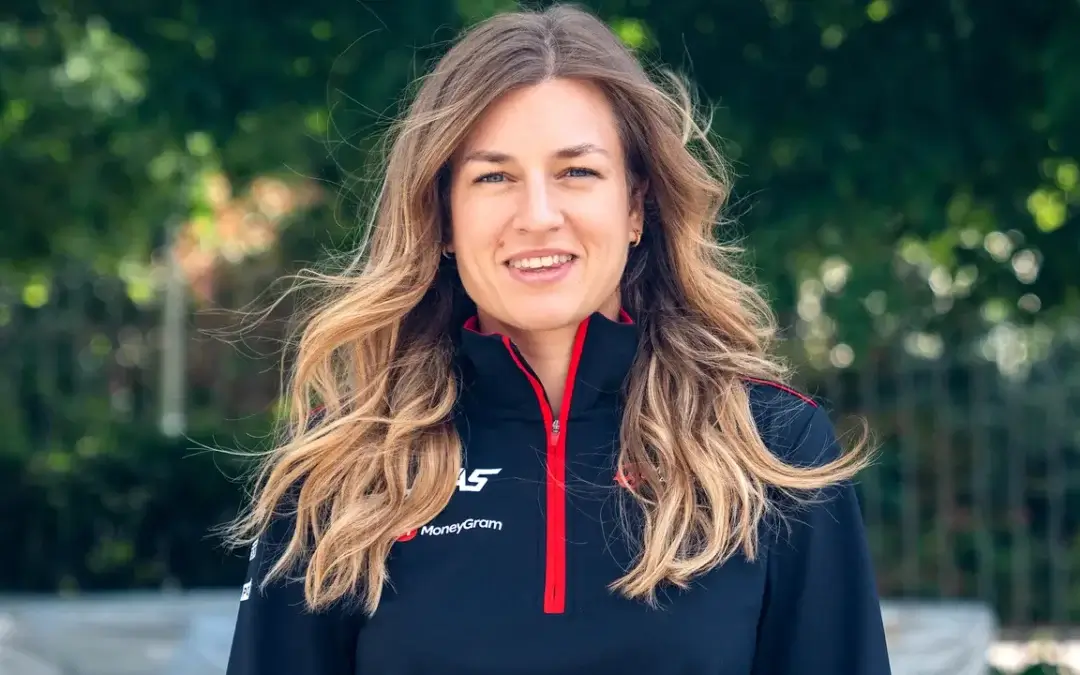
Laura Müller has been appointed as the Race Engineer for Esteban Ocon at the MoneyGram Haas F1 Team, making her the first woman in the sport’s history to hold this specific, high-pressure role on a full-time basis.
The Role: Why This Appointment Matters
To understand the significance of Müller’s promotion, one must understand the job. A Race Engineer is not just a mechanic or a strategist; they are the “quarterback” of the garage. They are the primary point of contact for the driver, responsible for:
-
Car Setup: Translating a driver’s vague feelings (“it feels loose in the rear”) into precise mechanical adjustments.
-
Live Strategy: delivering critical information about gaps, tire wear, and weather while the driver is cornering at 200 mph.
-
Psychology: Managing the driver’s temper and focus during the heat of battle.
While women have held high-ranking positions in F1 before—such as Hannah Schmitz (Head of Strategy at Red Bull) or Bernadette Collins (former Head of Strategy at Aston Martin)—the Race Engineer is the most visible operational role on the pit wall.
From Munich to the Pit Wall
Müller’s rise to the top was not a publicity stunt; it was a methodical climb built on engineering rigor.
-
Academic Roots: A native of Lake Constance, Germany, Müller earned her Bachelor’s and Master’s degrees in Automotive Engineering from the prestigious Technical University of Munich.
-
The Junior Ladder: She cut her teeth in the trenches of motorsport, working in DTM (German Touring Masters) with Abt Sportsline, where she engineered for female driver Sophia Flörsch. She also gained experience in endurance racing (LMP2) and GT racing with Manthey Racing.
-
Arrival at Haas: Müller joined Haas in 2022, starting in the simulator department. Her technical acumen quickly saw her promoted to Performance Engineer, where she spent 2024 analyzing data to extract maximum speed from the car.
The “Ocon” Factor
For the 2025 season, Haas underwent a complete driver overhaul, bringing in the experienced race-winner Esteban Ocon from Alpine. The team needed a strong engineer to partner with the fiery Frenchman, and Team Principal Ayao Komatsu looked internally.
Komatsu was clear that this appointment was based on merit, not optics.
“When she sees a problem, she digs deep… She doesn’t stop at the first answer. She has a good work ethic such that when she finds the first solution, she knows there are 10 new questions to answer.” — Ayao Komatsu, Haas Team Principal
Ocon, known for his own determination, reportedly gelled quickly with Müller during post-season testing, praising her relentless work ethic and “no-nonsense” approach.
A New Era for the Paddock
Müller’s promotion is part of a wider restructuring at Haas, which also saw Ronan O’Hare promoted to Race Engineer for rookie Oliver Bearman. However, Müller’s role carries a unique weight.
For decades, young female engineers looked at the pit wall and saw no one who looked like them wearing the headset. Now, when millions of fans tune in to the broadcast and hear the radio crackle with instructions for car No. 31, they will hear Laura Müller—proving that the “voice of God” in a driver’s ear doesn’t always have to be a man’s.
Laura Müller: Career at a Glance
| Year | Team / Series | Role |
| 2021 | Abt Sportsline (DTM) | Race Engineer (Sophia Flörsch) |
| 2022 | Haas F1 Team | Simulator Engineer |
| 2023-24 | Haas F1 Team | Performance Engineer |
| 2025 | Haas F1 Team | Race Engineer (Esteban Ocon) |
What’s Next?
You can hear Laura Müller on the team radio during the 2025 Formula 1 season. Keep an ear out for the communications with Esteban Ocon (Car 31) during qualifying and race sessions.