
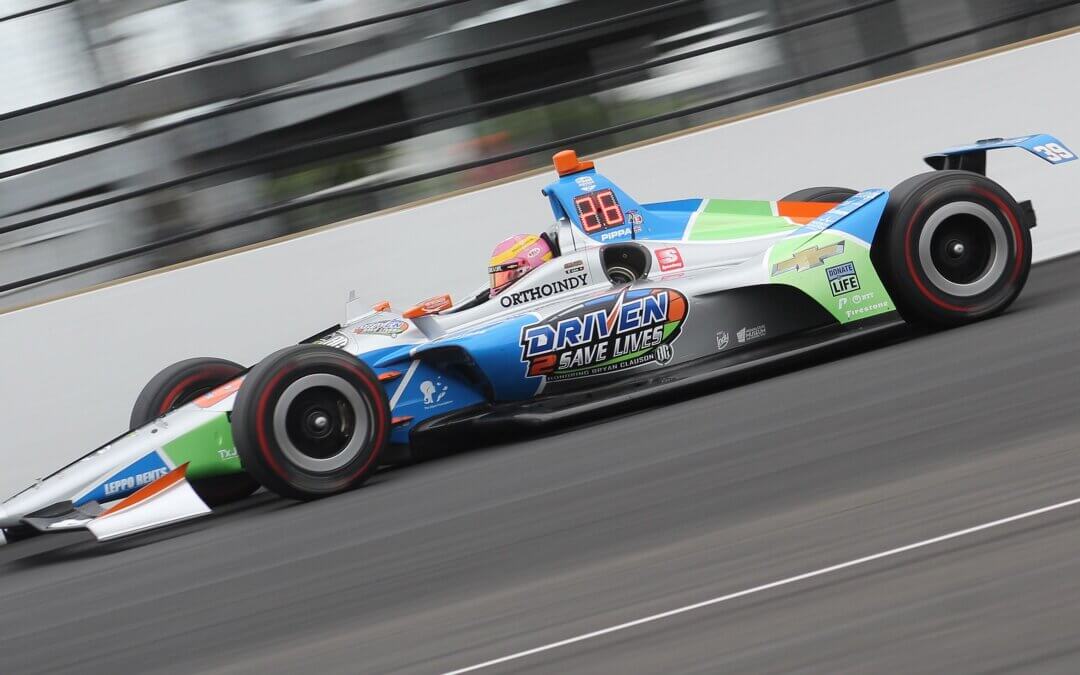
In the sleek, carbon-fiber world of IndyCar, where sponsorship dollars often dictate grid positions, Pippa Mann carved out a lane that was entirely her own. She wasn’t just the woman in the race car; she was the woman in the pink race car, a blur of neon at 220 mph that represented something far bigger than a checkered flag.
While other drivers chased podiums, Mann chased a purpose. As a seven-time Indianapolis 500 starter, she became one of the most resilient figures in modern motorsport, turning her annual “Month of May” into a high-speed crusade for breast cancer awareness.
The British Invasion
Born in London, Mann followed a traditional European path early in her career, cutting her teeth in open-wheel series across the continent. But in 2009, she made the bold decision to cross the Atlantic, eyeing the oval tracks of America.
She quickly proved she could handle the unique violence of oval racing. Competing in Indy Lights (now Indy NXT), the development series for IndyCar, she made history in 2010. She became the first woman to win a pole position at the Indianapolis Motor Speedway and one of the few women to win a race in the series, taking victory at Kentucky Speedway.
The Indy 500 Specialist
Pippa Mann’s relationship with the Indianapolis 500 was defined by grit. She often drove for smaller, budget-constrained teams, meaning she had to fight harder just to make the field than many big-team drivers did to win it.
Her tenacity was legendary. She became an “Indy-only” specialist for much of her career, spending the entire year preparing for that single, grueling race in May. In 2017, she etched her name into the record books again, becoming the first woman to turn a lap at the Indianapolis Motor Speedway at over 230 mph, clocking a terrifyingly fast 230.103 mph during Fast Friday practice.
Despite the odds, she qualified for the “Greatest Spectacle in Racing” seven times. Her best result came in 2019, where she finished 16th, driving a smart, clean race for Clauson-Marshall Racing after struggling just to get the car into the show.
The Pink Car
For millions of fans, Pippa Mann is synonymous with the “Pink Car.” In partnership with Susan G. Komen, the world’s largest breast cancer organization, she transformed her vehicle into a rolling billboard for the cure.
This wasn’t a standard sponsorship; it was a mission. Mann famously removed traditional sponsors from the car to make room for the Komen branding, raising funds and awareness directly through her racing. She raced for survivors, often carrying the names of those affected by cancer on her car, proving that motorsport could be a vehicle for empathy as well as adrenaline.
Shifting the Future
Today, Mann has traded her full-time firesuit for a headset—though she still hops behind the wheel for endurance races like the Nürburgring 24 Hours, where she has secured class podiums.
Her primary focus now is ensuring the next generation of female racers doesn’t face the same funding cliffs she did. As the CEO of Shift Up Now, she works tirelessly to secure sponsorship and grants for female drivers, helping them climb the ladder from karting to the pros.
“This is not the Pippa Mann show. This is not about me. It’s about making a difference for women in our sport.”
Pippa Mann may not have won the Borg-Warner Trophy, but she won something perhaps more enduring: the respect of a garage that values toughness, and the hearts of fans who saw a driver fighting for them.
Fast Facts: Pippa Mann
| Milestone | Detail |
| Indy 500 Starts | 7 (2011, 2013–2017, 2019) |
| Speed Record | First woman to lap IMS at over 230 mph (2017) |
| Indy NXT History | First woman to win a pole at IMS (2010); Race winner at Kentucky |
| Best Indy 500 Finish | 16th (2019) |
| Current Role | CEO of Shift Up Now; Performance Driving Coach |
Learn more at: https://www.pippamann.com/