
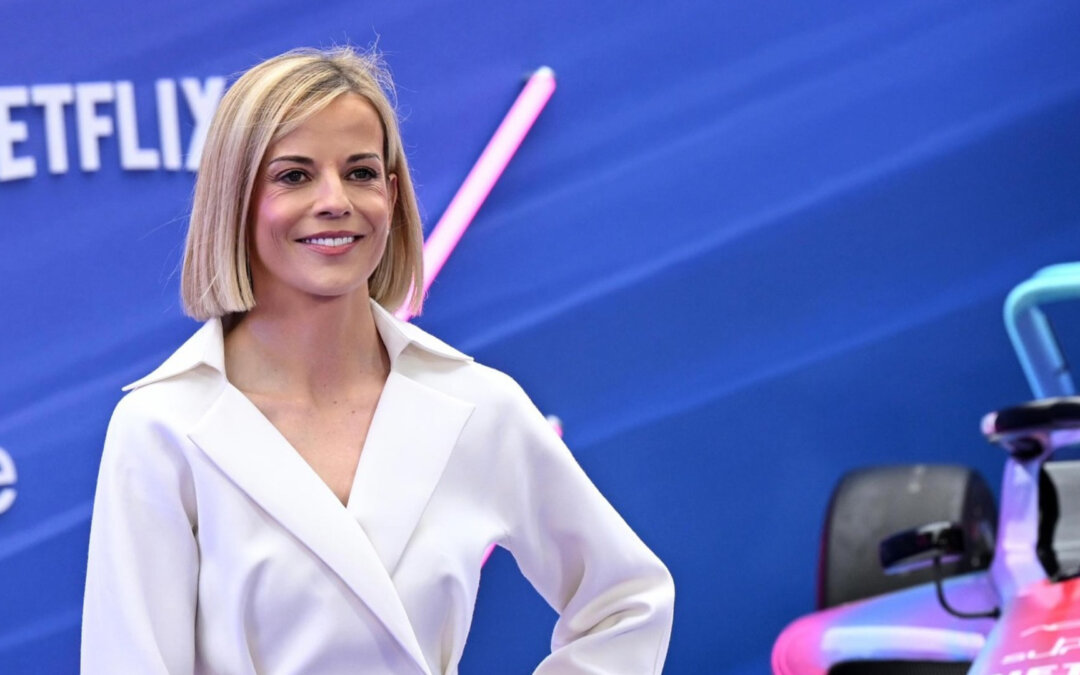
In the hyper-competitive world of motorsport, there are those who drive the cars, and there are those who drive the sport itself. Susie Wolff is one of the rare few who has done both.
From the rain-soaked karting tracks of Scotland to the glitzy paddock of Formula 1, Wolff’s career has been defined by a quiet, steely determination to prove that she belongs. But she didn’t just want a seat at the table; she wanted to build a new table entirely. Today, as the Managing Director of the F1 Academy, she is the architect behind the biggest push for female representation in the history of Grand Prix racing.
The Racer
Born in Oban, Scotland, Susie Stoddart (as she was then known) didn’t have to look far for inspiration—her parents owned a motorcycle dealership, and her father raced bikes. But she chose four wheels, rising through the karting ranks to become the British Woman Kart Racing Driver of the Year multiple times.
Her professional career was forged in the fires of the DTM (German Touring Car Masters), one of the world’s toughest series. For seven years, she banged wheels with the best drivers in Europe as a factory driver for Mercedes-Benz. While she didn’t claim a DTM title, her consistency and technical feedback caught the eye of the Formula 1 world.
The Silverstone Moment
In 2014, Wolff did something that hadn’t been done in a generation. As a test driver for the Williams F1 Team, she rolled out of the garage for Free Practice 1 at the British Grand Prix.
It was a historic lap. She became the first woman to take part in a Formula 1 race weekend in 22 years. Despite the immense pressure and the media circus surrounding her gender, she focused on the data. In a later session at the German Grand Prix that same year, she silenced the doubters by finishing just two-tenths of a second off the pace of her teammate, veteran Felipe Massa. She had proven that a woman could handle the physical brutality of a modern F1 car.
From Driver to Team Boss
When Wolff hung up her helmet in 2015, she didn’t walk away; she leveled up. She launched the “Dare to be Different” initiative to inspire young girls to enter the sport, but her biggest management test was yet to come.
In 2018, she became the Team Principal of Venturi Racing in Formula E, the all-electric world championship. Critics whispered that it was a PR move. Wolff responded by transforming the team. She led them to their most successful season ever, securing a Vice-World Championship title before being promoted to CEO. She wasn’t just a “female team principal”; she was a winning one.
The Architect of the Future
Today, Wolff holds perhaps the most important job for the future of diversity in racing: Managing Director of the F1 Academy.
Launched in 2023, this all-female championship is designed to fix the “broken pipeline” of female talent. Wolff isn’t just a figurehead; she is hands-on, negotiating with F1 teams to support these drivers and ensuring the winner gets a fully funded seat in the next tier of racing.
“I was brought up to be the fastest driver, not the fastest girl. Now, I want to make sure the next generation doesn’t have to fight the same battles I did.”
Susie Wolff started her career trying to beat the boys. She is spending the rest of it ensuring that, one day, beating the boys won’t be headline news—it will just be racing.
Fast Facts: Susie Wolff
| Milestone | Detail |
| F1 History | First woman in 22 years to participate in an F1 race weekend (2014 British GP) |
| Team Leadership | Former Team Principal & CEO of Venturi Formula E (led team to Vice-World Championship) |
| Current Role | Managing Director of F1 Academy (Appointed March 2023) |
| Honors | Appointed MBE in 2017 for services to women in sport |
| DTM Career | 7 seasons as a factory driver for Mercedes-Benz |
Learn more: https://www.susiewolff.com/